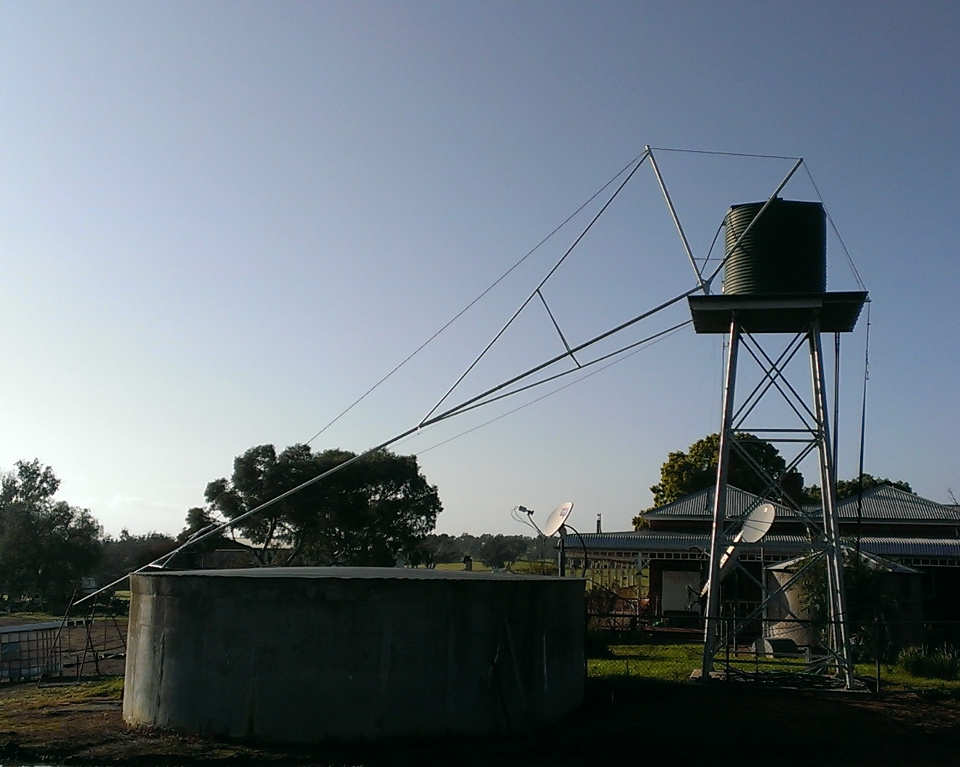
I constructed my Inverted-V from materials at hand - fencing wire, baling twine and a few porcelain insulators previously used for electric fencing.
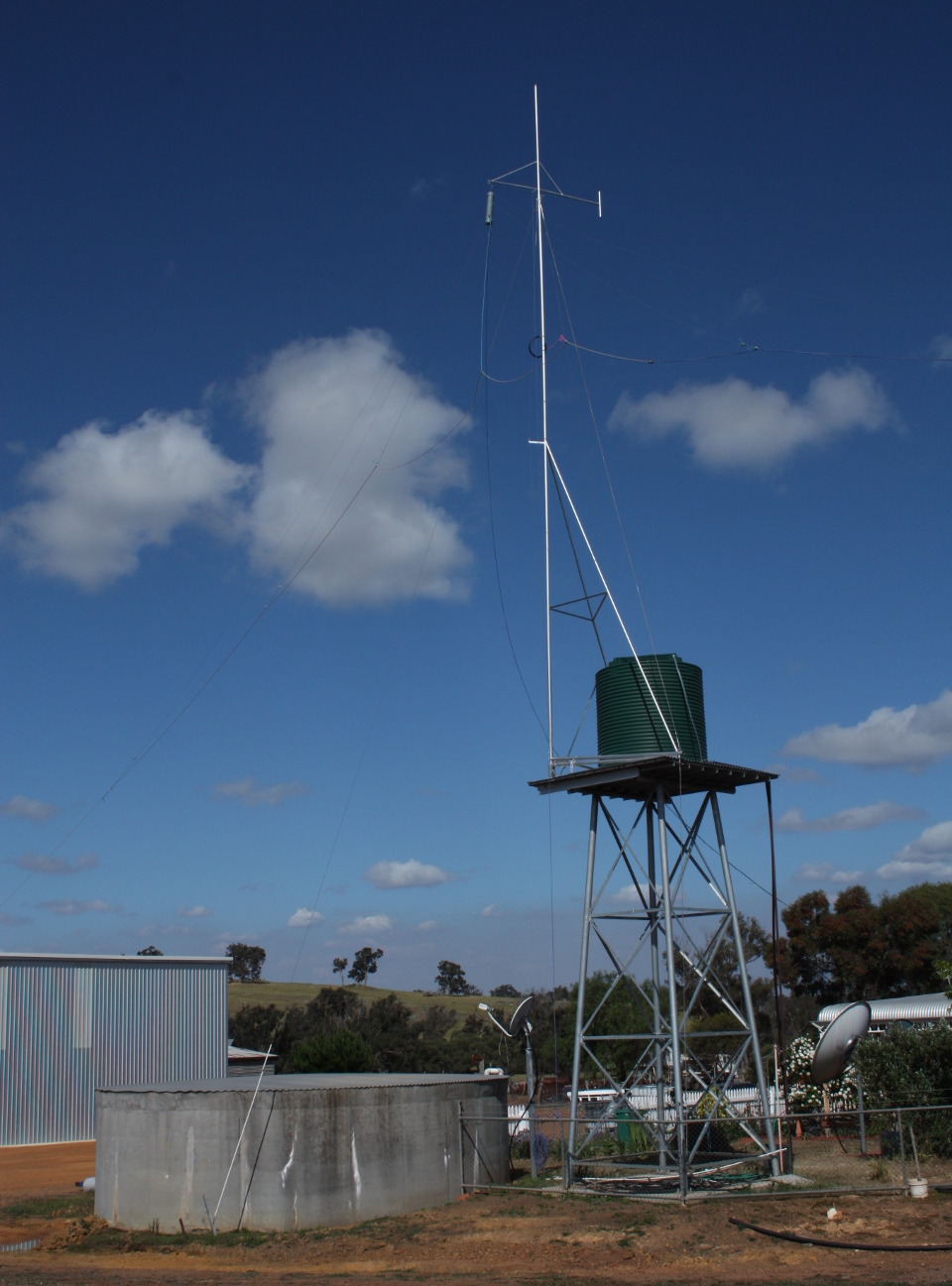
The whole thing is prevented from succumbing to gravity by a selection of old water pipe from the scrap heap, perched on top of a tank stand. It can be tilted over by a single person with the aid of a 1 ton hand winch with the measured tension on the winch being a maximum of 400kg with the rotator and beam installed. The paint job (ormonoid silvershield) may be misleading.
The cross-arm on the mast is about 17m up. The top section can be removed for maintenance or upgrades if needed, although I planned ahead leaving room for a beam antenna at the top, plus a couple of small verticals on the side.
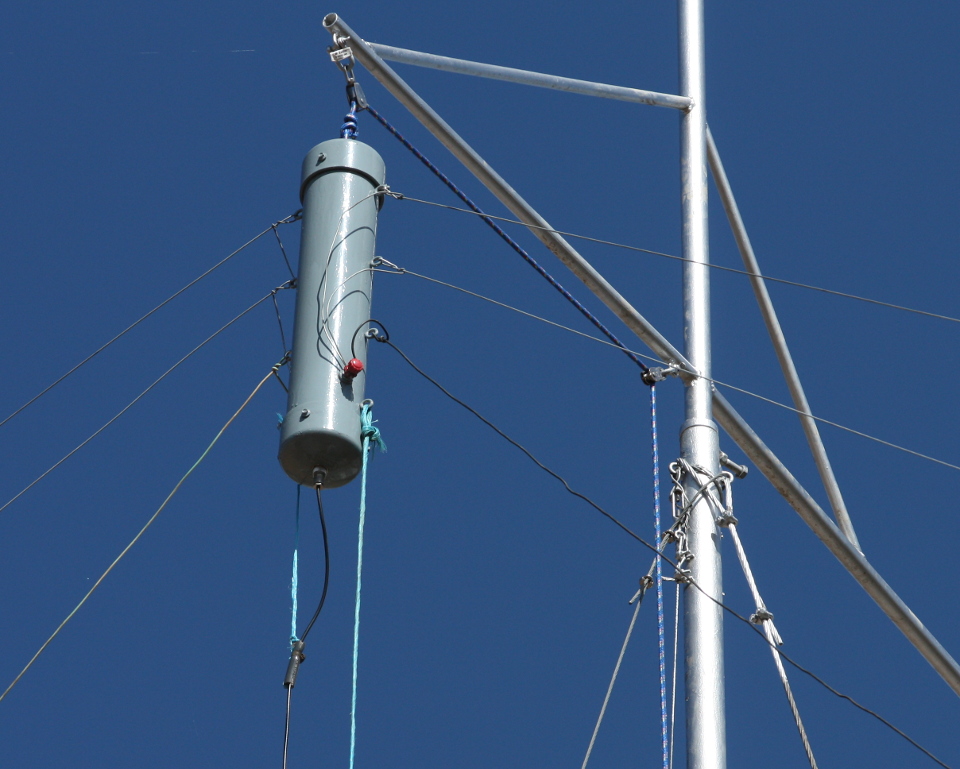
The 1:1 current balun/choke (12 turns of enameled wire on a torroid core) is encased in a piece of 150mm PVC pipe with end caps and stainless steel eye-bolts for the wires. Two pieces of 1/2" copper pipe down the inside of the PVC prevent the eye-bolts from pulling through the PVC. The design is based on an SRI Fan Dipole, with the wires spaced 150mm vertically.
Each dipole is trimmed to length to adjust the frequency, and the ends are raised or lowered to optimize the SWR. I do not use a tuner on this antenna which has an SWR below 1:1.5 for most of each band.
For now I have 20m, 40m and 80m bands, plus a spare set of eye-bolts if I want to add another band.
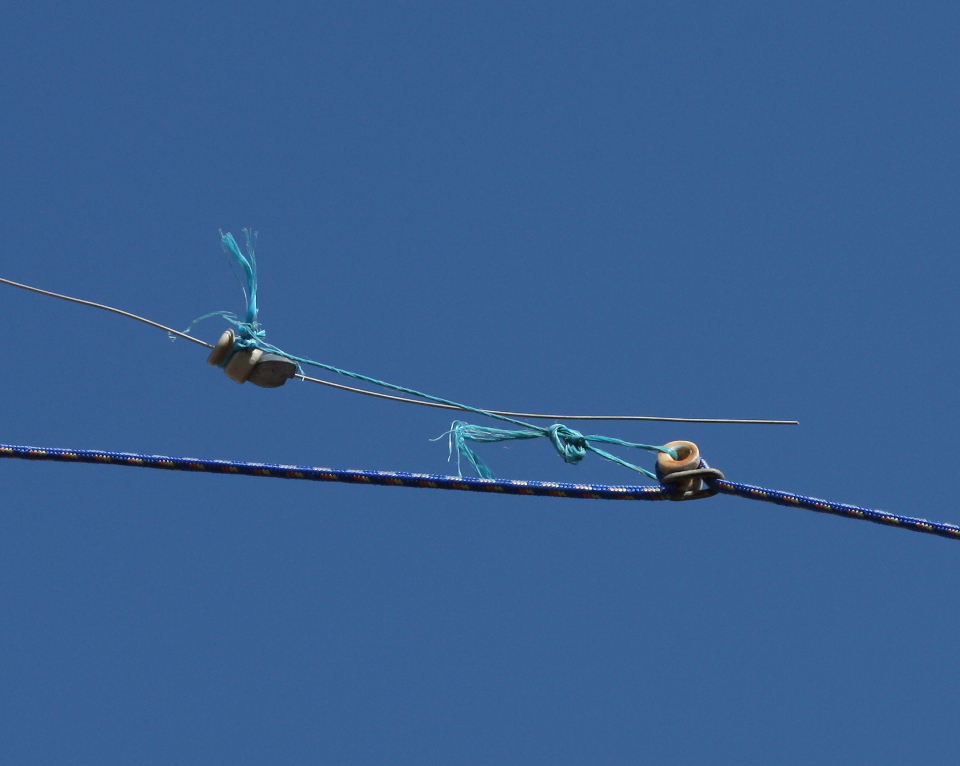
The outer ends of the wires are secured using one insulator and a chain link to grip the spacing rope and provide simple adjustment of the angle of the V, tied to a second insulator with the end of the wire threaded through it. I neat device called a "gripple" prevents the wire from sliding out while being simple to slide further along when tuning the antenna.
Signal reports seem to suggest I did a good job and it works pretty well :-)
Click the images for a closer look.
A pretty standard inverted V antenna tuned to 160m and suspended from the other end of the crossarm.

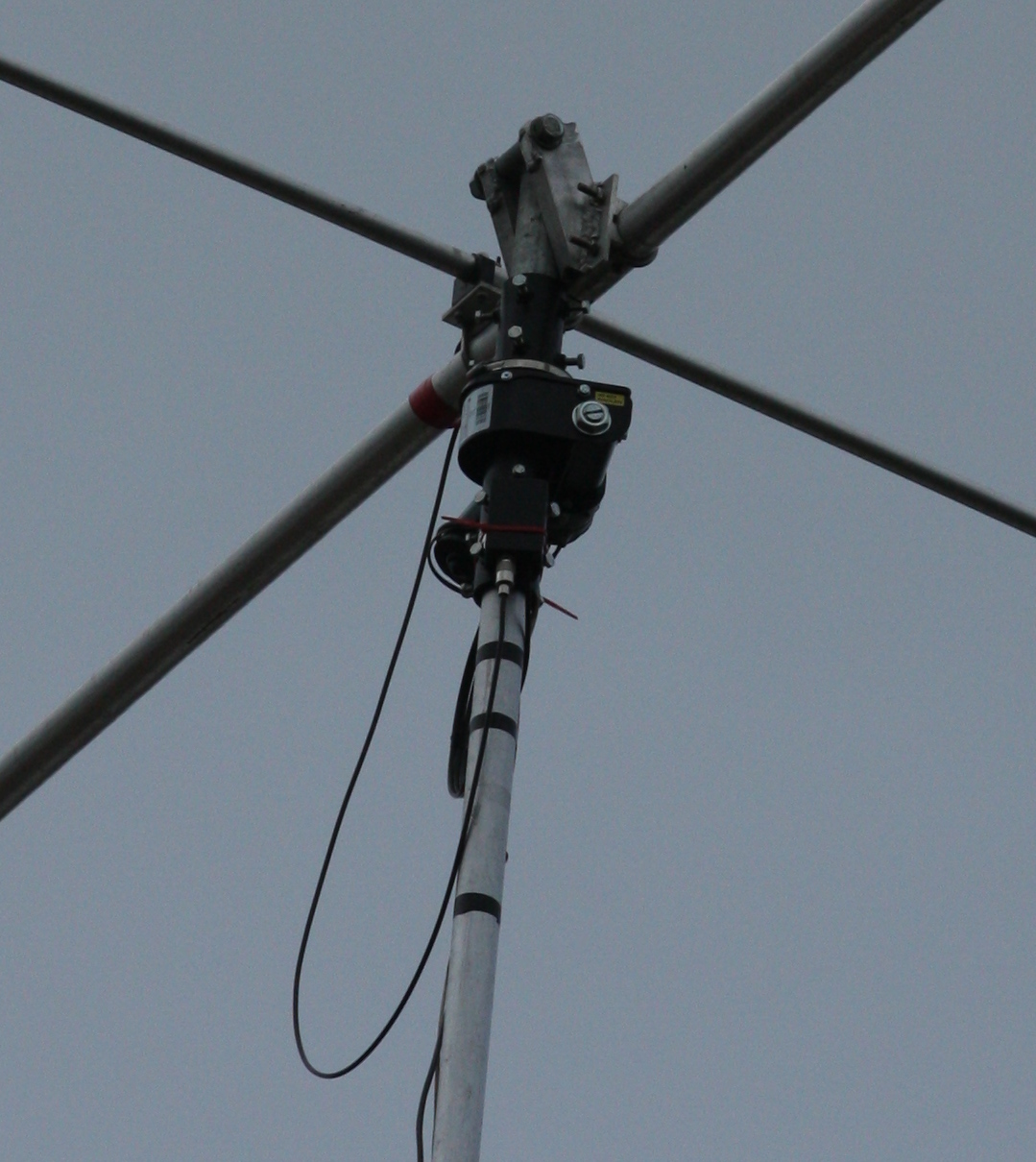

I have now added a TET-Emtron TE-33M tri-band mini-beam antenna on an Alpha SPID RAU Rotator.
The TE-33M operates on 20, 15 and 10m with around 6db gain. It's not a homebrew job, but I picked it up at a good price - cheaper than the materials to build one.
The SPID rotators require just four control wires, can be rotated through 720 degrees and can be zeroed at any position as they have no hard end-stops. They also can hold position to within one degree without a brake as they use a double worm drive.
The digital controller can automatically select the shortest rotation to a particular heading (within the 720 degree limit, or a programmable subset of that). It also has a FTDI chip on board to provide control and status info over USB.
I have attached the beam to the top of the rotator in such a way as to allow it to maintain almost level as the tower is lowered, provided it has been moved to the correct heading beforehand.
This allows the rotator and balun to be lowered to about shoulder height above ground without removing any elements.
It also "falls level" when the tower is upright, so there is no need for a locking mechanism.
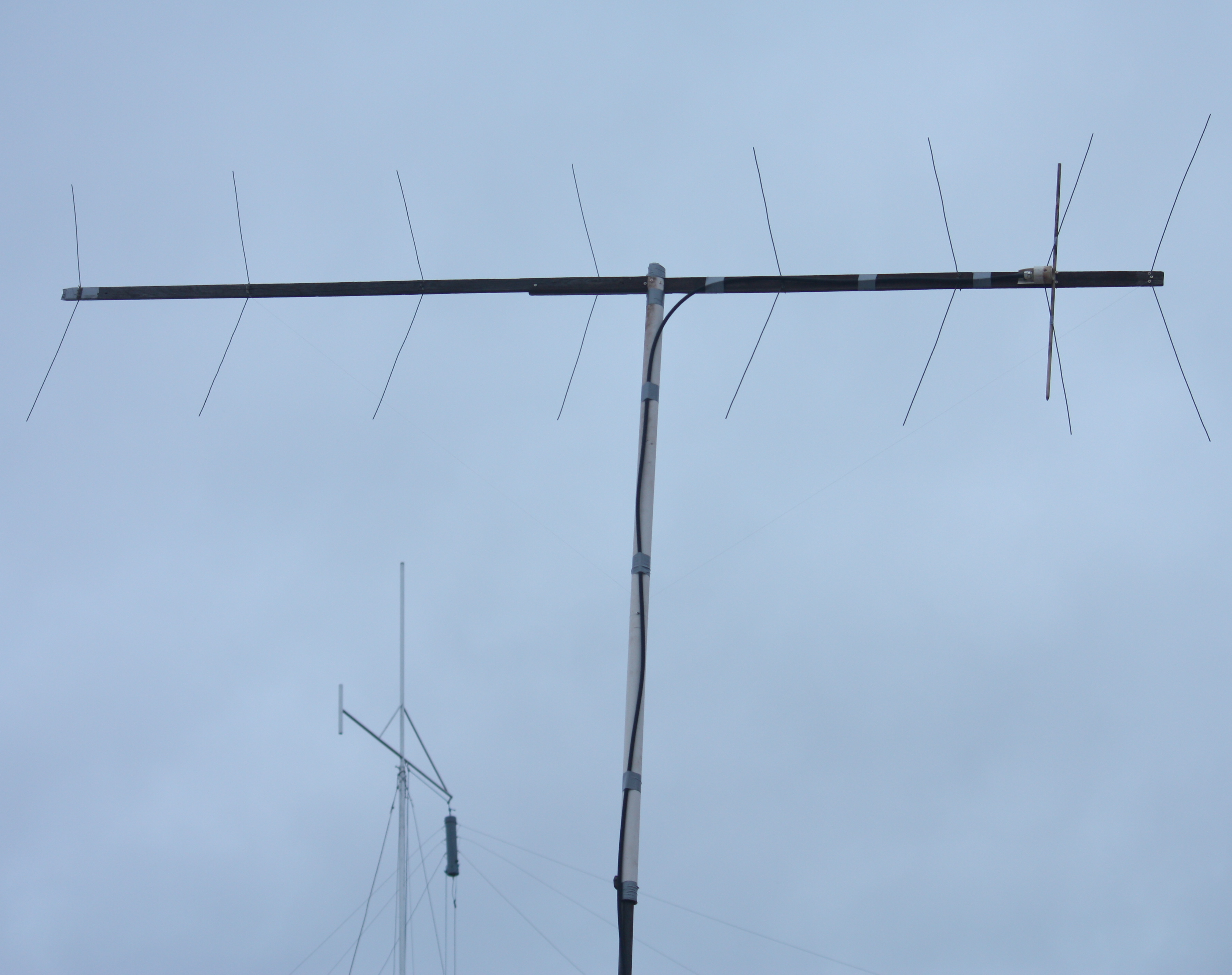
Like the Inverted-V, the Yagi is constructed from materials at hand - Fencing wire and tomato stakes, held up 6m by an old length of pipe until I get a rotator and some good co-ax organized and put it on top of my main tower.
Currently it takes about 10-20w into this yagi to climb out of the valley I live in and reach the local 2m repeater 48.5km away... or 0.5w from the top of the hill a few km away.
I can sometimes reach another repeater 104km away, but that depends on very good conditions with the current setup.
The 2m antenna is a work in progress :)
The MFJ-1026 works best with an auxiliary antenna that is a slight distance from the main antenna and with a similar ability to pick up signals (at least to cancel out distant noise).
The 160m inverted V is used as the noise antenna and a switch has been fitted to the 1026 to swap the main and noise antenna sockets, making it easy to switch bands and still have a noise antenna.